Client: Helix Energy Solutions
Platform: Helix Q7000 Semisubmersible
Application: Well Intervention & Decommissioning
Challenge
The Helix Q7000 is a purpose-built well intervention and decommissioning semisubmersible, operating with a mix of permanently installed systems and campaign-specific rental equipment from multiple third-party suppliers. With no centralised data acquisition system onboard, each subsystem held its own data locally — leaving Well Operations Supervisors without a consolidated view of critical parameters, and no unified platform for logging, client reporting, or relay to third-party services such as mudlogging.
RCP was engaged to design and build a custom EDR to consolidate data from across the vessel into a single database and present it through a purpose-configured HMI. The integration challenge was significant: third-party systems from Huisman, Kongsberg, and SLB each operated on different communication protocols — ProfiBus, ProfiNet, CanBus, Serial, WITS0, and TCP/IP — with no common interface. The system also had to be genuinely modular, able to accommodate new or swapped rental equipment between campaigns without significant redesign, and remotely reconfigurable by RCP engineers without requiring site visits. Communication cable runs of up to 200 metres across the vessel ruled out copper-based Ethernet, and hazardous area compliance was required throughout.
Solution
Bespoke EDR integration across five third-party systems and six communication protocols
RCP developed the Q7000’s EDR around its established Electronic Drilling Recorder platform, modified with bespoke software and targeted hardware additions to meet the vessel’s specific integration requirements.
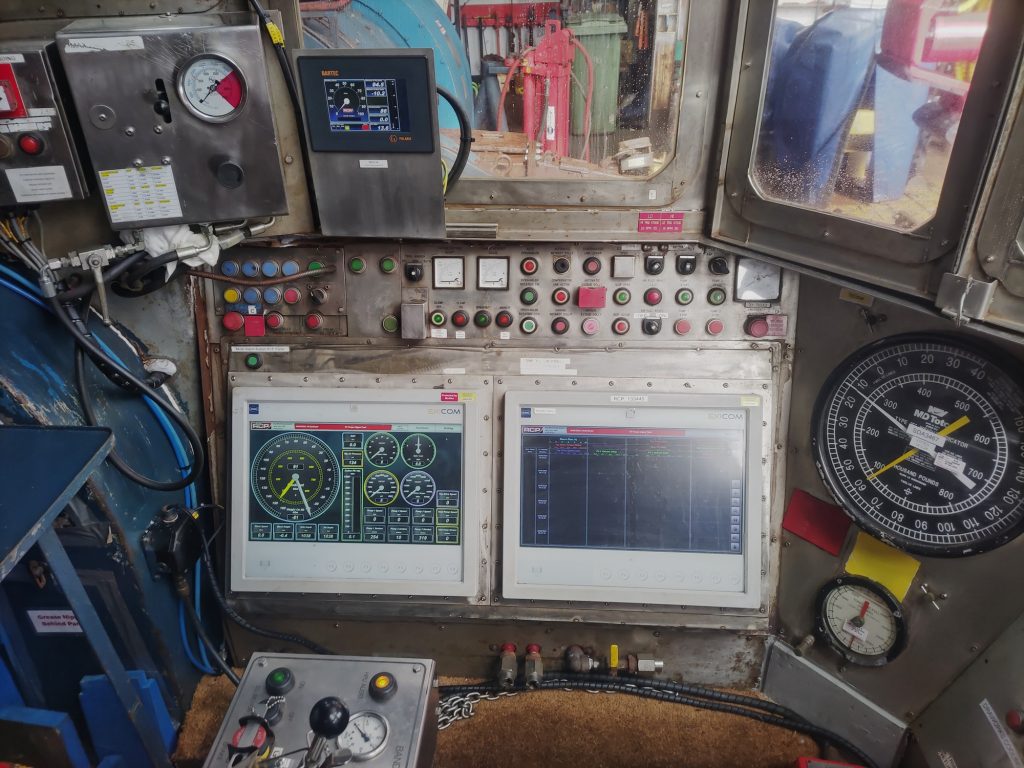
The core system uses Siemens S7-1500 series PLCs and a Siemens industrial PC, with a 15-inch touchscreen panel PC in the safe area operators’ cabin as the primary HMI. Where the Q7000’s protocol mix extended beyond the standard EDR’s native capabilities, Ethernet/ProfiBus and Ethernet/CanBus media converters were added to bridge communication between the EDR controller and connected third-party systems. All long-distance data runs were carried over TCP/IP via fibre-optic infrastructure to ensure reliable bandwidth across the vessel.
RCP supplied and integrated additional sensors directly: mud pump stroke sensors, choke pressure sensors, cement unit stroke and pressure sensors, pit level sensors, and CH4 and H2S gas detection. Hazardous area sensor loops were protected through galvanic isolation barriers with full I.S. documentation and certification. Ex-rated gas sensors were connected directly to the safe-area EDR controller.
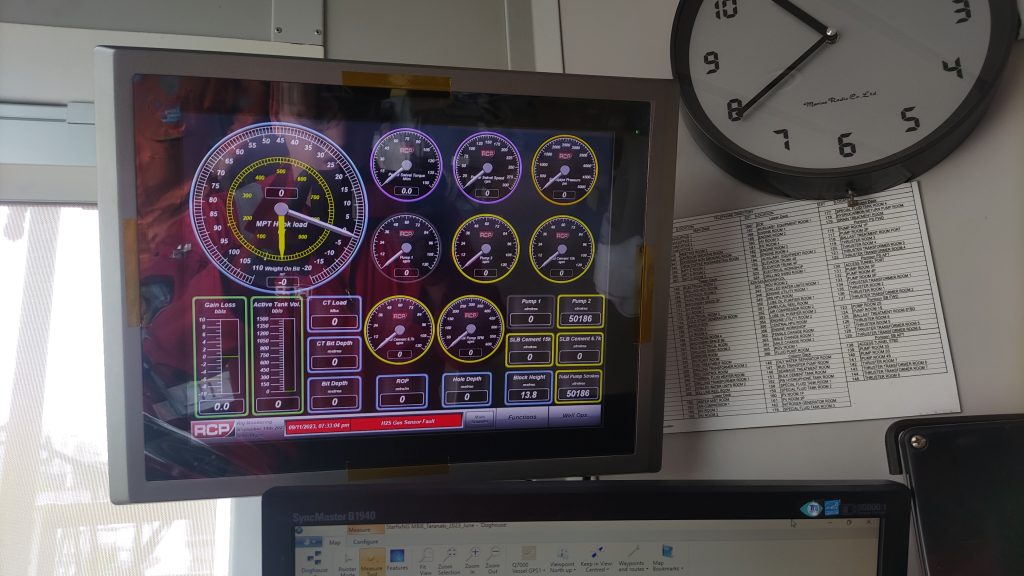
The HMI provides real-time data display with configurable gauges, bar graphs, and trend views, along with user-settable high and low alarms. Historical data and alarm events are logged on a six-month sliding window. PDF reports can be generated on demand or to an automatic schedule. Data is relayed outward via WITS0 to SLB mudlogging services, and the system supports cloud-based viewing through a secure AWS server infrastructure, accessed by RCP engineers via VPN for remote diagnostics and configuration.
UPS power — supplied by a Kohler unit with ESD integration — ensures the EDR remains operational and accessible to the Well Operations Supervisor during a full power loss event, supporting safe suspension of drilling floor operations.
Results
The completed system integrates data from five separate third-party suppliers into a single, centralised EDR platform — providing the Q7000’s operations crew with consolidated real-time visibility for the first time.
The modular architecture has been validated across two subsequent upgrade campaigns, each completed without interruption to operations. One campaign required an additional TCP/IP output to Wellgear services and an extension of EDR viewing to a Zone 1 HMI in the cementing area. A second required an expanded UPS for extended independent operation. Both were delivered through remote configuration by RCP engineers, without site visits.
A split-screen display mode — combining real-time data and historical trends in a single view — was developed at Helix’s request during the design phase and is now available as a standard option across RCP’s EDR product line.
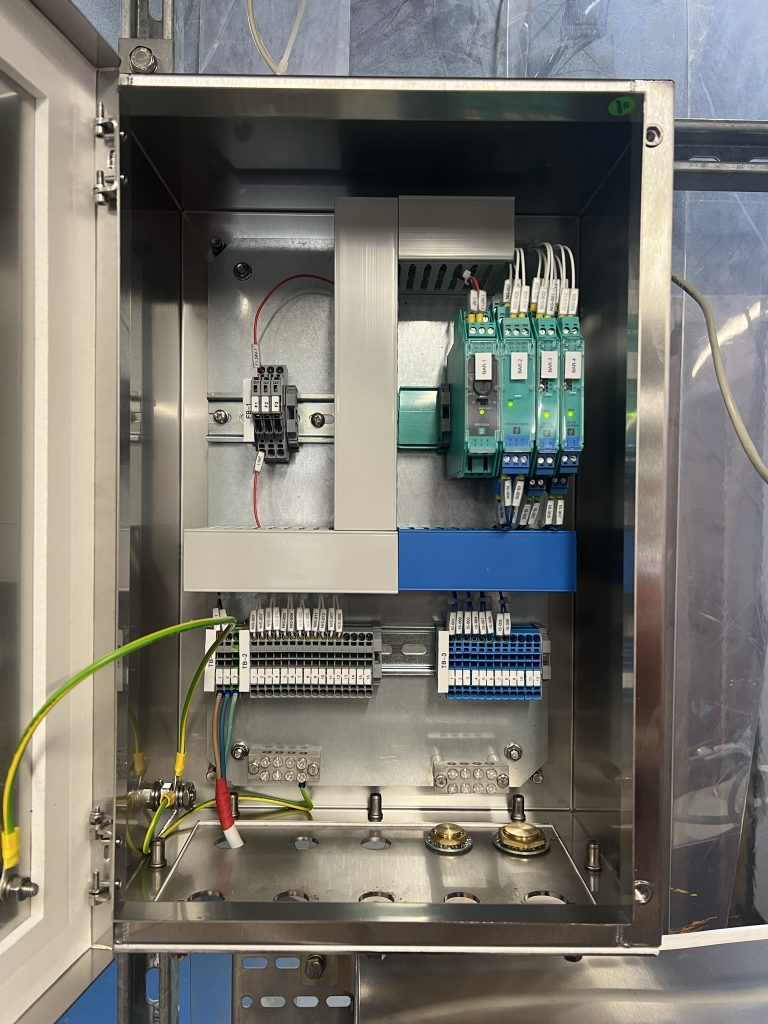
EDR Communications Spiltter
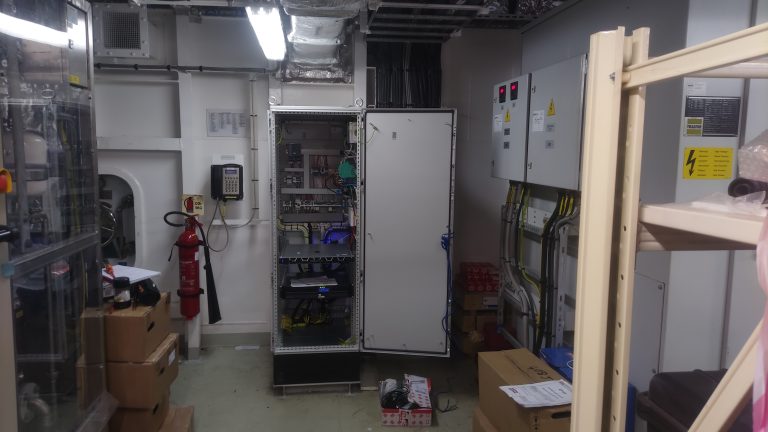
EDR Controller Installed Onboard
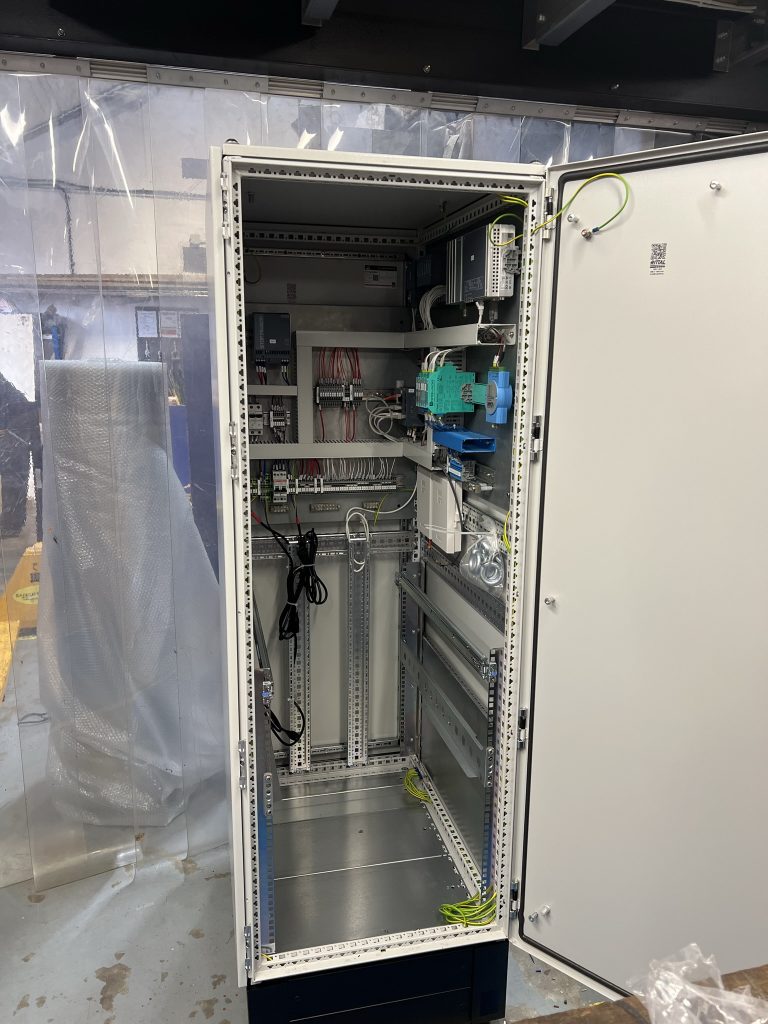
EDR Controller
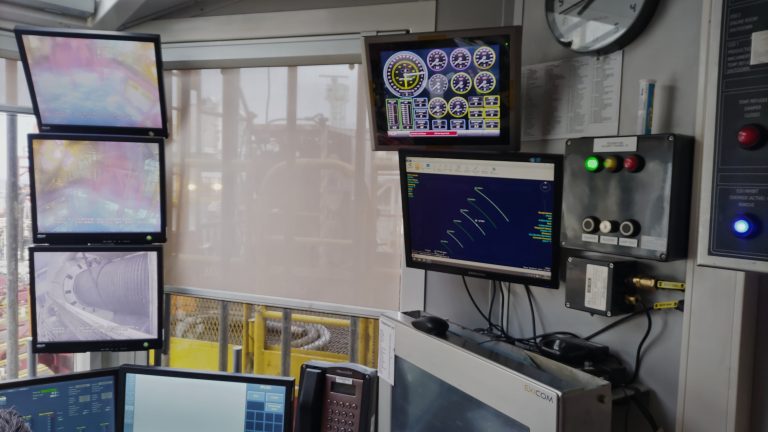
EDR HMI Workstation
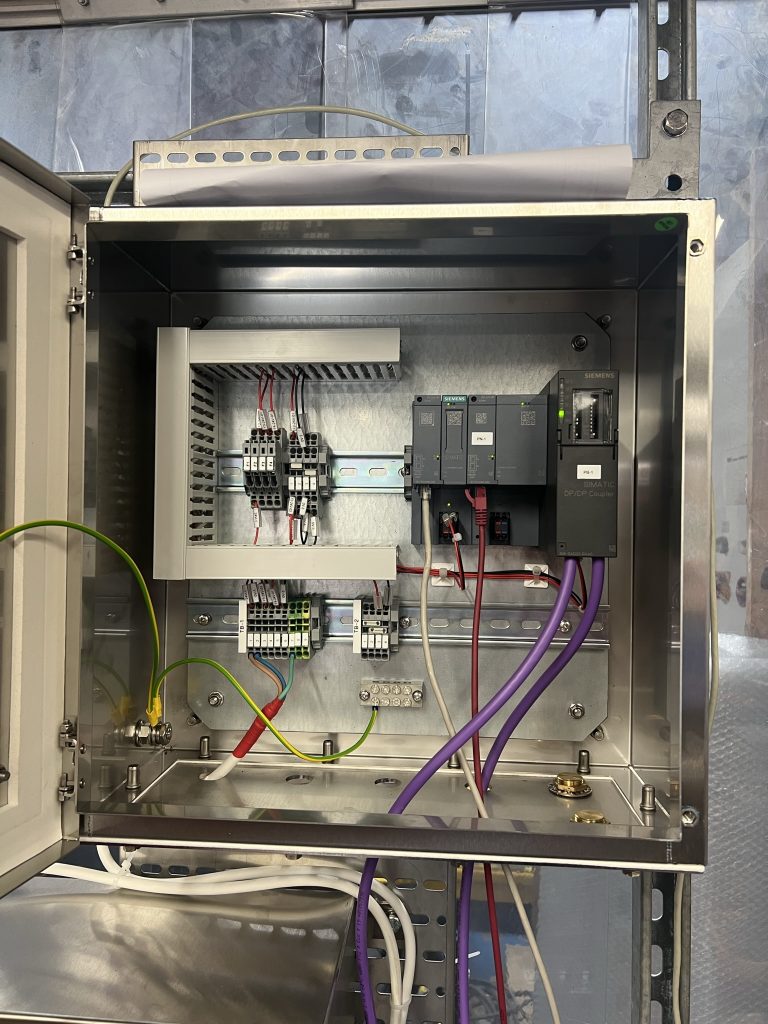
EDR Remote Communications Unit
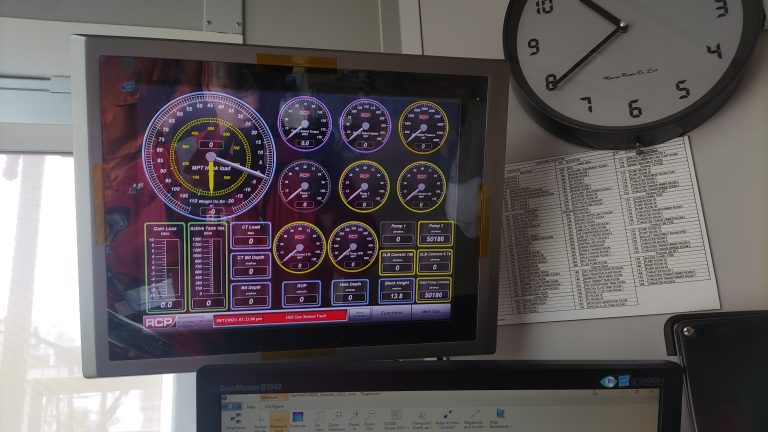
EDR Safe Area HMI
Need to Replace an Obsolete Control System?
RCP specializes in reverse-engineering and modernizing obsolete drilling control systems. Our solutions maintain existing interfaces while adding enhanced safety, diagnostics, and future expandability.
Applications:
- Traveling Block Monitors
- HPU controllers
- Anti-collision systems
- Drawworks control upgrades