Improved safety & lifting efficiency between offshore cranes and vessels
Real-time deck motion monitoring for offshore crane operations. Wireless system measuring vertical deck velocity and calculating Effective Significant Wave Height at multiple deck locations to improve lifting safety and operational availability between offshore cranes and supply vessels.
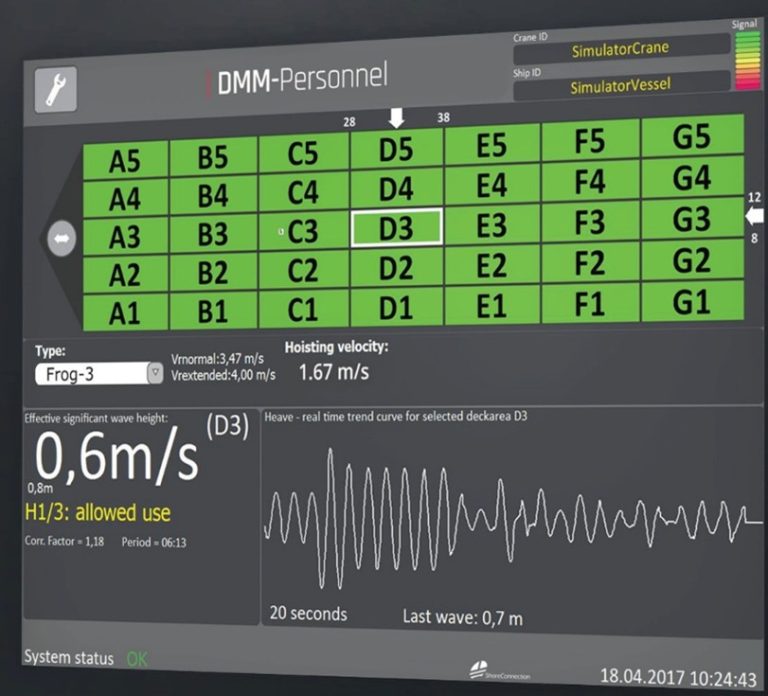
DMM Main Screen
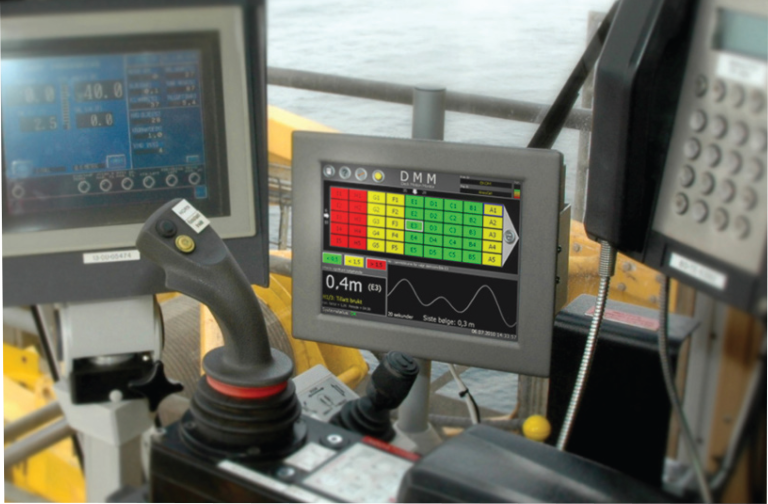
DMM Main Screen – Operator HMI Installation
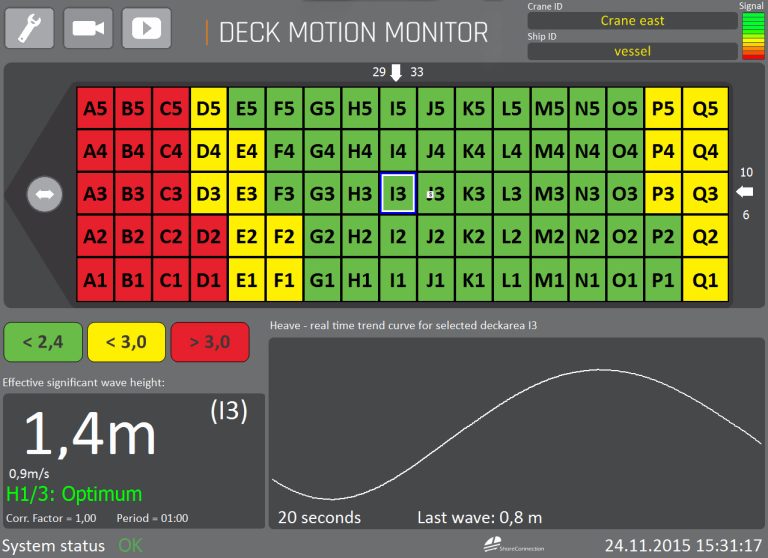
DMM Main Screen – Recent Vessel installation
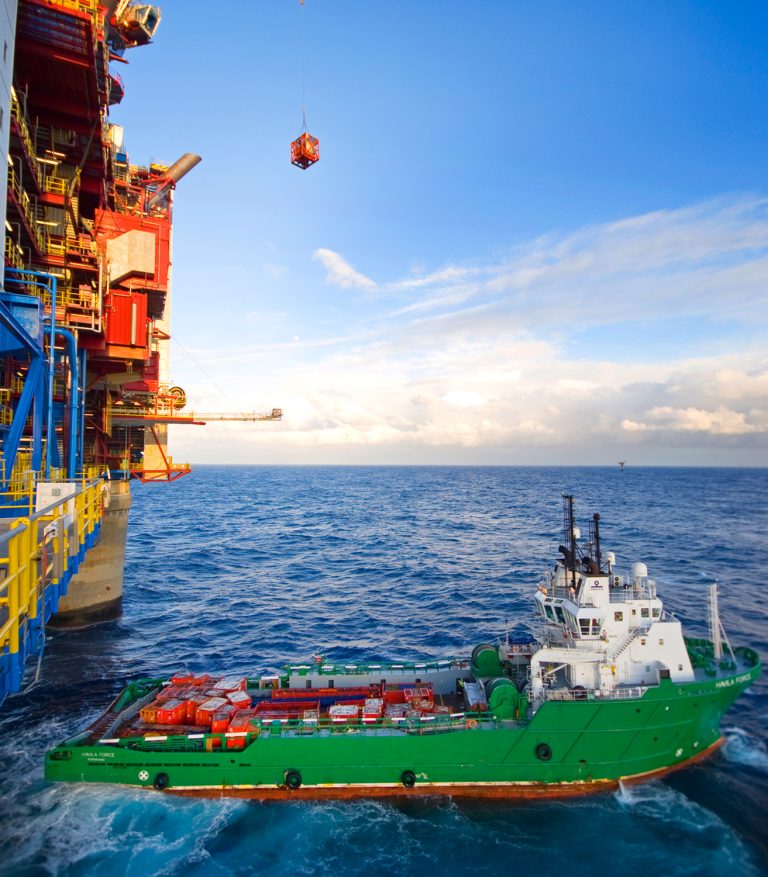
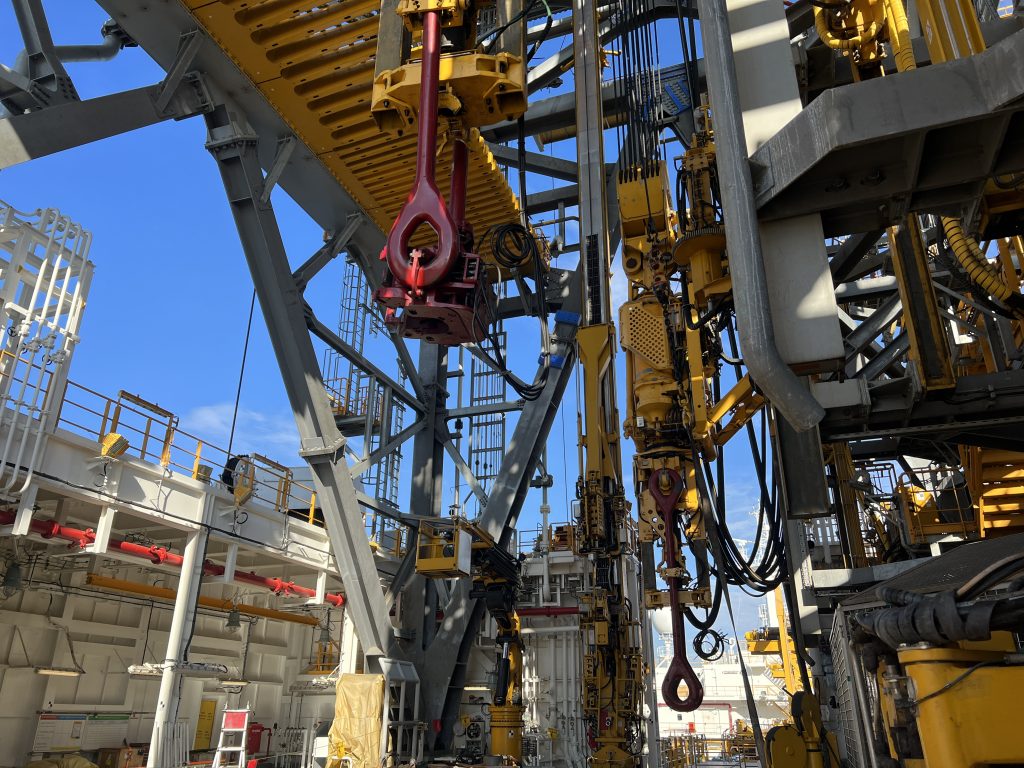
A Figure representing offshore crane operations
Traditional Method
The traditional method, using wave buoys, radars or manual observation of the sea state, does not take any further consideration to the following:
- The accuracy of the estimated / measured Significant Wave Height (H1/3)
- The variation in wave type and period
- The variation in downward velocity at different deck positions
- The variation in shape, stability and loading condition of the vessel
- The variation in direction of the waves in relation to the vessel heading
By using the DMM all the above mentioned uncertain factors are eradicated. With the DMM system, the Vessel Officer and Crane Operator can make safe decisions based on facts.
Typical Layout
The DMM consists of a master system onboard the vessel, and a slave unit installed in the crane. All the measurements and calculations are done in the master system, and transmitted wirelessly to the crane.
By measuring vertical deck velocity, and calculating Effective Significant Wave Height at multiple locations, we ensure compatibility with Safe Load Indicators for offshore cranes and wave limits for personnel transfer.
The Crane Operator sets the Safe Load Indicator limits, and the DMM system displays safe and unsafe lifting zones. The Crane Operator can monitor the specific area of the planned lifting operation.
Approval of the DMM Method
Based on the DNV DMM Technical Report a recommendation for use was made applicable to the CEN / TC 147/WGP 5 on the 29.03.2007. WGP 5 is the Working Group within Technical Committee CEN/TC 147 Cranes – Safety, which has developed and also maintains the EN 13852-1 standard.
EMC / Safety / Environmental compliance
EN 55022 / EN 55024 / EN 61601-6-2 / EN 301 489-1 / IEC 60945/50-1 / IEC 61508